
In 1952, the Tama Electric Car Co. established a division known as the Prince Motor Co., in honor of the Japanese Crown Prince Michinomiya Hirohita. The car was marketed under the name Nissan Skyline ALSI-1. In 1954, the Prince Motor Co. conglomerated with Fuji Precision Industries, the engine producers for the Prince Motor Co., which then merged with Nissan in 1966. Due to the world events at that time, these mergers were seen as an attempt by the Japanese government to stabilize its industrial manufacturing economy and to prevent foreign interests from taking control. Consequently, there were a number of Datsun Skylines roaming the streets of Japan in the late 1950s. Now that we're armed with this historical tangent, you can see why the Skyline is fit for a king--because it was produced in honor of a Crown Prince.
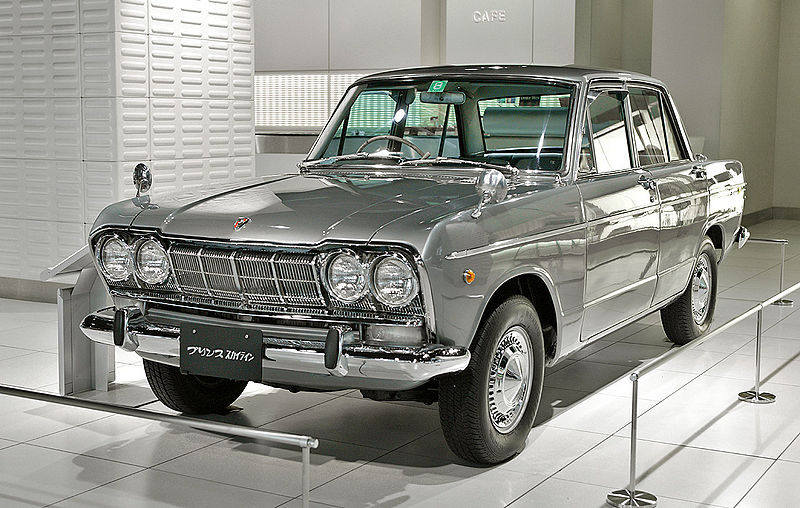
Various manifestations of the Skyline have been improved upon over the years, starting with the first Nissan Skyline in 1955. The ALSI-1 Skylines were available in four-door and station-wagon configurations. The engine powering this future king of the road was the Nissan GA30, a four-cylinder 1.5L engine that rocked all of 60 hp to the flywheel. The ALSI-2 Series upgraded the ALSI-1 in 1958 with a GA4 engine that upped the power to 70 hp. The ALSI-2 was produced until 1963 and saw the introduction of the four-headlight front-end.
The Prince division of Nissan then, had an idea--"Let's go racing!" And so began the dominating prowess of the Skyline. Engineers thought bigger would be better, so they produced another limited-edition model that would qualify the car for GT-class racing. The wheelbase was extended and the firewall was pushed back to fit a larger six-cylinder engine (it sounds like they were thinking way ahead of their time.) Nissan's G7 six-cylinder engine was shoehorned into the engine bay and consumers liked it so much that the car went into full production, christened as the Skyline 2000GT.
The 2000GT came in two versions, the GT-A and GT-B. The GT-A retained the original G7 motor and ran a single carb to the tune of 105 hp. The GT-B engines received a dome-piston configuration to up the compression and were subsequently mated with triple carbs and a larger fuel tank to accommodate the thirst of the 125-hp motor. Dual piston caliper brakes were standard on both models, while race-inspired flow-through air vents were incorporated into the production cars. In the Japanese Gran Prix in 1964, the Skyline finished first in a file of impressive competitors, succumbing only to the purpose-built Porsche 904GTS, a pure race car. Not bad for a family sedan, we'd say. The GT-B, used in the racing campaigns, proved a surprisingly successful competitor until its reformation in 1968.
But in the meantime, however, an Italian one-name wonder called Michelotti (not Madonna) oversaw the production of the first limited-edition Skyline that was hand-built to strict standards, the BLRA-3. Available in a two-door and drop-top configuration, the Skyline Sport was powered by the 1.8L overhead-cam four-cylinder motor that rocked the early '60s with its sporty 94 hp. The car, however, was deemed too expensive and stayed a limited edition, never seeing full production status.
Instead, Nissan introduced the S 50-E Series Skylines as a toned-down production car. In coupe or station wagon form, the cars were powered by the new G1 engine, another four-cylinder monster producing 70 hp. The famous circular Skyline taillights saw their first inception in these models, used, ostensibly, to offset the new boxy styling of the exterior. Also in this series, the sportiness of the production Skylines was pushed along as some models were now available with "four on the floor," a four-speed gearbox and sporty bucket-style seats. For the truly sporty, the three-speed column gearbox (that's the one that's attached to the steering wheel) had a single bucket seat for those that really felt the need for speed. The 1967 S 50-E models were upgraded to the most powerful 1.5-liter engine in Japan at the time, the G15.
The Skyline's heritage and history
The Skyline's heritage and history
Tur hende sa y ta conoce Skyline. Pero lo mi haal aan (copy und paste) un paar di alinea pa bo sa da roots di e auto aki.

 The make up of any "culture" must evolve or die.....
The roots remain...
but as with anything(everthing) else it is up to those who are the future to shape the future.


Yyyyyyyyyyyyyyyyyyyy e ta sigui asinaki.... Photos by Wikipedia
That year (1968), the Skyline got a facelift and would soon after be getting a new surname. The G15 motor still powered the sedan and wagon configurations, with an 1800 model powered by the G18 engine. However, the car was officially a Nissan-only proposal, with the Prince badge being dropped from the lineup. In 1970, alongside the Skyline sedan and (eek!) five-door van models, the 2000GT received a Nissan L20 engine, a 2.0L six-cylinder engine producing 105 wild horsies to play with.
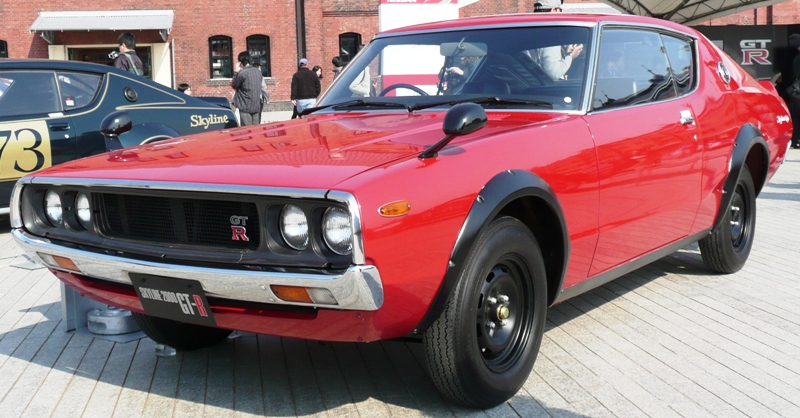
Base-model Skylines, the 1500 series, were flanked by the GC10 series, a model comparable to the previous GT-A, but the speed freaks in Japan wanted bigger, badder and better--they longed for the GT-B replacement model. In 1969, their prayers were answered with the introduction of the first Skyline GT-R. Powered by the S20 engine, the GT-R produced 160 hp from 2.0 liters of displacement and was comparable in power to other, more popular Italian and German sports cars of the day. The GT-R was ready to race, built with a stripped-down interior and powered by the same engine used in previous Nissan Gran Prix race cars. Upon the release of the two-door version, the GT-R went on to win an unbelievable 33 first-place racing wins, with subsequent variations of the GT-R extending this number to 50. All this occurred in a year-and-a-half time span until the beginning of the GT-R's first demise in 1972.
With the oil and gas crisis increasing, Nissan had to tone down the available power in the Skyline. The C110 series Skylines came in four configurations: the 1600 and 1800 series, the 2000 GT and the 2000 GT-R. Of these, the GT-R was the most powerful, of course, retaining the same 160-hp powerplant of the previous generations. However, increasing pressure to economize oil and fuel reserves in the late '70s called for the end of the GT-R nameplate in 1977. In 1978, the C211 series Skylines were introduced, available in four slightly different configurations from the C110 series: the 1600TI, the 1800TI, the 2000 GT and the 2000 GT-ES. Because of the heightened emissions restrictions, the GT-R lost its place in the lineup, replaced by the GT-ES model. This, however, signaled the start of a new era of Skylines--the turbocharged models. Powered by an L20ET motor, the GT-ES produced a slightly lower 140 hp at the flywheel, but managed to meet the emissions and fuel consumption requirements of the time. This was certainly another milestone in the progress of the Skyline supercar.
The next, ostensibly less-dramatic change came in 1981 with the introduction of the R-series Skylines, which remained the unchanged moniker of the car almost to this day. The first R-series cars came in five different model choices with a selection of a four-cylinder engine or one of two six-cylinder engines, all using single overhead-cam configurations. In October 1981, the engineers once again turned their eyes to the production-model racing world and introduced the Skyline RS. First available with a four-cylinder 150-hp engine, the car was subsequently motivated to new heights with the addition of a factory turbocharger in the FJ20ET engine, which produced 190 hp. The later addition of an intercooler to this setup broke the 200 mark, with the car checking in at 205 hp to the flywheel. The foundation for the Skyline's mythical power production was laid.
Because of the success of the R30 RS on the racing circuit, the R31 series Skylines didn't see much of a difference in configurations, save for the ubiquitous R-series engines, these particular Skylines sporting the RB20DET, a six-cylinder dual overhead-cam turbocharged engine producing 180 hp. With the popularity of "family cars" on the rise, however, it would be another two years before the introduction of a coupe version was seen.
In 1986, the Skyline GT-X Coupe hit the showroom floors and was an instant success. This marked another important milestone for the Skyline, as it was the first year to introduce the HICAS steering system, an all-wheel steering technology that allowed the car to handle tremendously out of proportion to its size, weight and chassis configuration. In 1988, the GT-X was renamed the GTS-X and its RB20DET powerplant receive a slight massage to the tune of 190 hp. In the previous model year, a limited-production race-ready Skyline, the GTS-R, was produced with a 210-hp RB20DET engine. Only 200 cars were produced in this configuration, which meant that it was still rare and highly desirable as far as Skylines were concerned.
While the Skyline was increasing in power and prowess, it was also getting relatively fat in its old age. The R32 series marked the return to the original concept behind the Skyline--an ultra-fast and agile race car with street tires. All other engines were dropped in favor of some version of the popular and potent RB series, with the GTS Type-M receiving the most powerful RB motor, a 215-hp RB20DET. In addition to another benchmark in Skyline technology--the availability of an all-wheel-drive transmission--the 1989 model year saw the reintroduction of the GT-R badge.
The R32 GT-R marked the beginning of the Skyline as most people know it today. Designed specifically for Group A racing, the RB26DET engine had to be de-tuned to meet the rules and regulations for racing in that particular class. The all-wheel-drive system became computer controlled, dubbed the ATTESA-ETS, and made the car unstoppable in the twisty-turnies. In addition, the all-wheel steering received a power-up in the form of Super HICAS technology. With the potent drivetrain, steering and powerplant in place, the Skyline ruled and schooled the Group A class so efficiently that it was abolished; every other competing manufacturer conceded the car was unstoppable. The GT-R was such a beast that it became widely known as "Godzilla," the supermonster of choice in the 1970s and early '80s.
In 1995, the R33 Skyline was introduced. Carrying the GT-R nameplate from the previous racing heritage in the '60s and its subsequent reintroduction a few years prior, the R33 GT-R had a lot to live up to. It retained the 280-hp RB26DET, due to racing regulations, but improved on the all-wheel steering and drivetrain components. Because of the aforementioned restrictions, Nissan needed a way to let the Skyline perform in a purer form. To this end, Nismo (Nissan's internal racing division) produced the 400R.
The 400R was strictly designed for competing in Japan's racing classes and therefore received a swollen version of the RB26 motor; 2.8 liters of displacement and two turbochargers later, the RBX-GT2 engine was born. The significance of the 400R came in the fact that, although the engine was limited to 280 hp as a production car, a bit of tinkering and tuning could produce insanely high amounts of horsepower (think of the 1,000-plus hp RB26-powered Skylines that are driving the streets of Japan today).
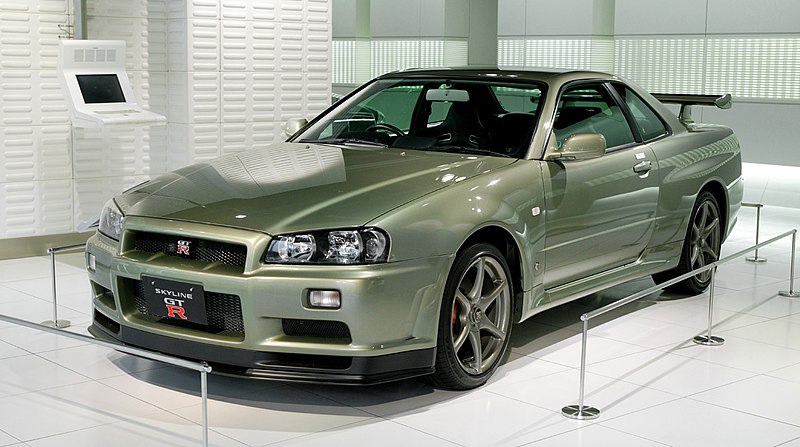
The R34 Skyline was a direct answer to the claims that the R33 was beginning to lose its racing heritage again. The R34 Skyline was sized down and weight was removed wherever possible, making it more in line with the racing heritage that it was raised on. Powerplants remained basically the same, while some models were dropped from the lineup, with the highest model 25GT-T producing 280 hp from an RB25DET motor. This is possibly the most popular Skyline from which many non-Nissan cars take their taillights and many Nissan enthusiasts take their powerplants.
Last year saw the latest manifestation of the Skyline, the V35. With the loss of the R-series nomenclature comes the loss of the R-series engines, and the disappearance of the signature Skyline round taillights. Two new powerplants, the VQ25DD and the VQ30DD, now represent the entire range of available Skyline engines; the VQ25DD produces 215 hp from 2.5 liters while the VQ30DD produces 260 hp from 3.0 liters. The car seems to be balancing its racing heritage with its need to find a place in the luxury sport car market, and its exterior styling is now closer to an Infiniti concept car rather than the "hot-box" design of the R-series Skylines which are popular today.


 The make up of any "culture" must evolve or die.....
The roots remain...
but as with anything(everthing) else it is up to those who are the future to shape the future.
-
Pmr racing

- RaceJunkies B*tch
- Posts: 947
- Joined: Tue Sep 02, 2008 1:55 am
- Location: aruba
- Contact:
Da shit!!!! Hakosuka GT-R, road race version di su S20. Un di e motibonan pakiko mi ta gusta un well designed naturally aspirated carbed six cylinder.
[YOUTUBE]CBjszmeEl-U&feature[/YOUTUBE]
[YOUTUBE]CBjszmeEl-U&feature[/YOUTUBE]
The make up of any "culture" must evolve or die.....
The roots remain...
but as with anything(everthing) else it is up to those who are the future to shape the future.
-
Pmr racing
- RaceJunkies B*tch
- Posts: 947
- Joined: Tue Sep 02, 2008 1:55 am
- Location: aruba
- Contact: