Automotive Information

Let's help each other. Cars stuff, computers,girls, etc.
User avatar
Chai
RaceJunkies B*tch
Posts: 3070
Joined: Mon Jun 13, 2005 3:31 pm
Location: Aruba
Contact:

Horsepower..continued

Post by Chai »

Effective horsepower (ehp) / True horsepower (thp)

Effective horsepower is the power converted to useful work. In the case of a vehicle this is the power actually turned into forward motion on a chassis dynamometer. In its cleanest form, it's also called "True HP" - the amount of power transferred to the drive roller plus the dyne parasitics, corrected the chosen atmospheric "correction factor".

In automobiles and motorcycles, "effective horsepower" is sometimes specified as wheel horsepower. All automotive type chassis dynamometers measure "True HP". Some companies then apply various, manufacturer specific produced inflation factors to boost up the displayed horsepower numbers for marketing purposes. It's common for many "mass market" dyno operators to not even be aware that the inflation is added.

Whereupon the problems arise.

As stated above, different companies choose to apply different amounts of power figure inflation to the power actually measured at a chassis dyne's drive roller - ranging from 0% (known as True Horsepower) to as much as 30% or more on common mass market dynamometer systems.

This random amount of power figure manipulation between manufacturers makes it impossible to compare power figures produced on different dyne systems - unless they specify "True HP" which indicates that they have added nothing other than the dyne's own parasitic drag (mostly wind and some bearing friction) and corrected to the test's atmospheric conditions.

"True hp" will be 10% to 20% or more lower than the engine's power "bhp" ratings because of a loss through the drivetrain, especially notably, the tires.

On a chassis dynamometer, "True hp" scale wheel horsepower will be a lower number than other chassis dynamometer variably adjusted upward power figures

History of the term "horsepower"

The term "horsepower" was invented by James Watt to help market his improved steam engine. He had previously agreed to take royalties of one third of the savings in coal from the older Newcomen steam engines.[7] This royalty scheme did not work with customers who did not have existing steam engines but used horses instead. Watt determined that a horse could turn a mill wheel 144 times in an hour (or 2.4 times a minute). The wheel was 12 feet in radius, thus in a minute the horse travelled 2.4 × 2π × 12 feet. Watt judged that the horse could pull with a force of 180 pounds (just assuming that the measurements of mass were equivalent to measurements of force in pounds-force, which were not well-defined units at the time). So:
Image

his was rounded to an even 33,000 ft·lbf/min.[8]

Others recount that Watt determined that a pony could lift an average 220 pounds 100 feet (30 m) per minute over a four-hour working shift. Watt then judged a horse was 50% more powerful than a pony and thus arrived at the 33,000 ft·lbf/min figure.[9]

Engineering in History recounts that John Smeaton initially estimated that a horse could produce 22,916-foot-pounds per minute. John Desaguliers increased that to 27,500-foot-pounds per minute. "Watt found by experiment in 1782 that a 'brewery horse' was able to produce 32,400-foot-pounds per minute". James Watt and Matthew Boulton standardized that figure at 33,000 the next year.[10]

Put into perspective, a healthy human can produce about 1.2hp briefly (see Orders of magnitude (power)) and sustain about 0.1hp indefinitely, and trained athletes can manage up to about 0.3 horsepower for a period of several hours.

Most observers familiar with horses and their capabilities estimate that Watt was either a bit optimistic or intended to underpromise and overdeliver; few horses can maintain that effort for long. Regardless, comparison to a horse proved to be an enduring marketing tool.

Horsepower from a horse

R. D. Stevenson and R. J. Wasserzug published an article in Nature 364, 195-195 (15 July 1993) calculating the upper limit to an animal's power output. The peak power over a few seconds has been measured to be as high as 14.9 Hp. However, for longer periods an average horse produces less than one horsepower.

[edit] Conversion of historical definition to watts

The historical value of 33,000 ft·lbf/min may be converted to the SI unit of watts by using the following conversion of units factors:

* 1 ft = 0.3048 m
* 1 lbf = gn × 1 lb = 9.80665 m/s2 × 1 lb × 0.45359237 kg/lb = 4.44822 kg·m/s2 = 4.44822 N
* 60 seconds = 1 minute

Image

And the watt is defined as Image so the historical figure of 33,000 ft·lbf/min converts exactly to the modern definition.

Image
User avatar
ArubaSpeed
Posts: 331
Joined: Mon May 12, 2003 9:19 am
Location: Aruba

Post by ArubaSpeed »

That is why newer dyno softwares have better correction factors f.e. SAE, STD, DIN etc.

Drivetrain loss: As a rule of thumb we use 14%-16% for manual tranny's and 18%-20% for automatics.

Mustang Dyno is known to be one of the lowest "reading" dynanometers. Dynojet Products are industry known to provide a more "accurate" true horsepower reading, thus making them the industry standard when it comes to auto/motorcycle dyno's
"MOVE!!! THE FREIGHT TRAIN IS COMING THRU!!!!!"

[SIZE="1"]nosey little fucker aren't u?!?![/size]
User avatar
Chai
RaceJunkies B*tch
Posts: 3070
Joined: Mon Jun 13, 2005 3:31 pm
Location: Aruba
Contact:

How to choose a clutch

Post by Chai »

How to choose a clutch

The selection of the correct clutch for the intended application is critical to good operation, including the characteristics of (but not limited to:

  • clutch feel
  • operating temperature range
  • wear characteristics / durability
  • clamping force
  • break-in period
  • Quite often, the first impulse is to get "too much" clutch. This is often a very big mistake, as there will be compromises in some or all of the operational features listed above.


The first step in identifying what clutch to get is dependent on the characteristics of the car. Ask these questions:

How much power does the car make?
How is it used? Street driving or track use? If for racing, what kind of racing?

So it is apparent that we have a broad range of power and use to contend with.

Presented in increasing "aggressiveness", here is a brief overview of clutch compounds, their power handling, and other characteristics:
(note that hp figures are generalized, pressure plate clamping force and torque curves are additional factors)


organic
CHARACTERISTICS Metal-fiber woven into "organic" (actually CF aramid with other materials), original-equipment style. Known for smooth engagement, long life, broad operating temperature, minimal-to-no break in period. Will take hard use, somewhat intolerant of repeated abuse (will overheat). Will return to almost full operational condition if overheated. Material is dark brown or black with visible metal fibers.
--------------------------------------------------------------------------------

kevlar
CHARACTERISTICS A high-durability material more resistant to hard use. Engagement is similar to organic, but may glaze slightly in stop-and-go traffic, resulting in slippage until worn clean when used hard again. Higher temp range in general, but can be ruined from overheating - will not return to original characteristics if "cooked". Has a break-in period of 500-1000 miles during which slippage may occur. Care must be taken during this period not to overheat from excessive slipping. Material is uniform yellow/green and may look slightly fuzzy when new.
USE Street-driven track cars Will take hard use, intolerant of abuse (will overheat and not recover completely). Due to the unforgiving nature of Kevlar, it is not recommended for street cars, especially those that see frequent stop-and-go traffic which will cause surface glazing of the clutch.

--------------------------------------------------------------------------------

segmented kevlar
CHARACTERISTICS Same material and characteristics as solid kevlar above, but segmented (blocks or sections missing) for better heat dissipation. Segmented design may result in shuddering or "stepped" engagement when used in traffic situations. Material is uniform yellow/green and may look slightly fuzzy when new, alternating sections removed for segmenting.
USE Street-driven track cars . Will take hard use, more intolerant of abuse (will overheat and not recover completely). Due to the unforgiving nature of Kevlar, it is not recommended for street cars, especially those that see frequent stop-and-go traffic which will cause surface glazing of the clutch.

--------------------------------------------------------------------------------

hybrid carbon/ceramic/organic
CHARACTERISTICS Organic material on one side and a segmented carbon or ceramic material on the other. The idea is that the organic side will help smooth the engagement, reducing the shuddering from the segmented side. Engagement is same as organic, but still with shuddering. Temperature and hp range is identical to organic. Carbon/ceramic side will wear flywheel or pressure plate surface faster and will wear out faster in traffic situations. Material is organic on one side (described above) and segmented or completely separate pucks (described below) on the other.
USE Can be used in same situations as standard organic. The "hybrid" design appears to be more of a marketing gimmick rather than an actual performance advantage. Some brands are poorly designed and wear unevenly due to flexation of the clutch disk. For examples of hybrid failure, click here.

--------------------------------------------------------------------------------

carbon/ceramic
CHARACTERISTICS Very high temperature materials, usually only found on multi-puck disks. Will accommodate 500hp+ Engagement is more abrupt. Will wear flywheel surface faster, especially in traffic situations. Carbon is slightly more durable and flywheel-friendly, ceramic has a higher temp range. Multi-puck design may result in slight shuddering or "stepped" engagement when used in traffic situations, although many users report completely acceptable operation. Material is any of several light hues - gray, pink, brown.
USE Street/strip applications for drag-racing and heavy track use cars up to 500hp. Will take very hard use, suitable for extreme-clamping applications.

--------------------------------------------------------------------------------

sintered iron
CHARACTERISTICS Extremely high temperature material. Will accommodate 700hp+ Engagement is on or off. Requires special flywheel surface. Material is metallic gray.
USE Strictly for high-horsepower endurance racing. With correct pressure plate, capable of extremely high clamping force. Engagement is like a switch, either on or off. Does not work well when cold. High-durability flywheel surface required, standard flywheels will be destroyed quickly.


Back to our original question, how to choose? The answer depends on the answers to the two basic questions asked earlier regarding intended use of the car and power output. Based on the answers, this gauge will help the decision:


To repeat the important point, do not buy more clutch than you need.

A simple organic disk will handle a wide variety of use - including street use, auto-x, and even true racing. In fact, SCCA ITS racing rules require a standard OE-spec organic disk. UUC has tested organic disks to reliably handle up to 475hp in long-term street use.

A kevlar disk is a good choice for a heavily-tracked or road-raced cars, especially with forced induction.

Carbon/ceramic should be left to high-power cars that see lots of drag racing, or are dedicated track/drag cars.

Sintered iron clutch disks are strictly for endurance racing.
Image
User avatar
GinoX
RaceJunkies B*tch
Posts: 5180
Joined: Thu Apr 24, 2003 7:58 am
Location: aruba

Rod Ratio

Post by GinoX »

The equation for the rod ratio is as follows:

Rod Ratio = rod length / stroke

Image

The sketch on the left shows a piston moving down a cylinder bore as a consequence of combustion pressure. This pressure is converted to a force on the piston. (It is interesting to note that for a given combustion pressure, a bigger bore will give rise to a larger force on the piston)

The piston in turns pushes on the rod, and this force is subsequently used to create a torque on the crank, causing it to rotate. Thus the burning of fuel and air is converted to mechanical energy that can be used to propel an automobile down the road (or track).
The length of the rod is depicted as L1 in the figure. Similarly the length of the crank arm is denoted by L2. Observe that L2 is not equal to the stroke. The stroke is in fact twice L2.

The ratio of the rod length to stroke is called "rod ratio" and is a useful term to quantify the kinematics (relative motion) of the piston as the crank completes a cycle. Rod ratio can also be used to quantify the dynamics of piston motion (the relative forces).
:2cents: The make up of any "culture" must evolve or die.....
The roots remain...
but as with anything(everthing) else it is up to those who are the future to shape the future.

ImageImage :laffin: Image
User avatar
GinoX
RaceJunkies B*tch
Posts: 5180
Joined: Thu Apr 24, 2003 7:58 am
Location: aruba

Rod Ratio

Post by GinoX »

The equation for the rod ratio is as follows:

Rod Ratio = rod length / stroke

Image

http://e30m3performance.com/tech_articles/engine-tech/rod-ratio/index.htm
:2cents: The make up of any "culture" must evolve or die.....
The roots remain...
but as with anything(everthing) else it is up to those who are the future to shape the future.

ImageImage :laffin: Image
User avatar
chicken wings
RaceJunkies B*tch
Posts: 1539
Joined: Fri Mar 09, 2007 10:07 am
Location: Tilburg

Post by chicken wings »

oOOo very nice........bo mes sa...ainda ami ta sinjando dus ya
User avatar
chicken wings
RaceJunkies B*tch
Posts: 1539
Joined: Fri Mar 09, 2007 10:07 am
Location: Tilburg

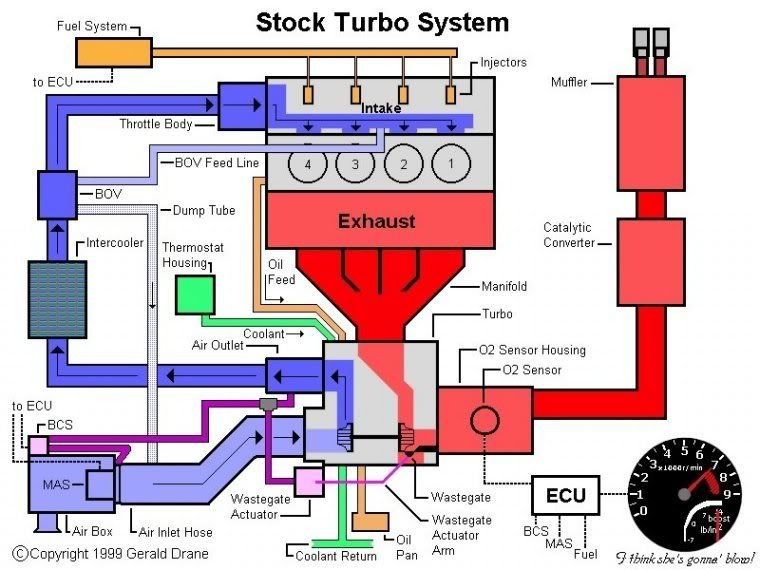
turbo diagram

Post by chicken wings »

esaki ta pa just in case someone wants to see it

Image
POWERED BY
Image

:peace:
User avatar
Chai
RaceJunkies B*tch
Posts: 3070
Joined: Mon Jun 13, 2005 3:31 pm
Location: Aruba
Contact:

Post by Chai »

[youtube]6BaECAbapRg[/youtube]
Image
User avatar
Chai
RaceJunkies B*tch
Posts: 3070
Joined: Mon Jun 13, 2005 3:31 pm
Location: Aruba
Contact:

Post by Chai »

Beehive spring in action
[SFIRE]Beehive-Valve-Spring-in-Action_155966[/SFIRE]
Image
User avatar
GinoX
RaceJunkies B*tch
Posts: 5180
Joined: Thu Apr 24, 2003 7:58 am
Location: aruba

Post by GinoX »

NIce harmonics!
:2cents: The make up of any "culture" must evolve or die.....
The roots remain...
but as with anything(everthing) else it is up to those who are the future to shape the future.

ImageImage :laffin: Image
User avatar
chicken wings
RaceJunkies B*tch
Posts: 1539
Joined: Fri Mar 09, 2007 10:07 am
Location: Tilburg

Post by chicken wings »

nice vids chai
POWERED BY
Image

:peace:
Post Reply